Introduction to Module 1
Welcome to the first module of this course. This module sets the foundation by explaining why tobacco use is a major global public health and development challenge in low- and middle-income countries (LMICs), and it lays the groundwork for further discussion on the concept of tobacco harm reduction in subsequent modules, particularly within low- and middle-income settings.
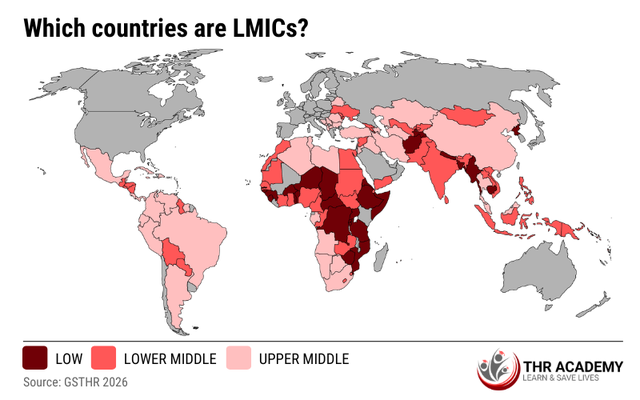
In this course, LMICs refer to nations classified by the World Bank according to their gross national income (GNI) per capita. This classification groups countries into low-income, lower-middle-income, and upper-middle-income categories based on economic capacity and development indicators. Collectively, LMICs comprise over 130 countries worldwide and are home to the majority of the global population. Geographically, LMICs are predominantly located across sub-Saharan Africa, South and Southeast Asia, Latin America and the Caribbean, parts of the Middle East and North Africa, and Eastern Europe and Central Asia.
Learning objectives
By the end of this module, you should be able to:
- Describe the scale of tobacco-related morbidity and mortality globally and in LMICs.
- Explain how tobacco consumption trends have evolved over time across different regions.
- Recognise gender-specific and occupational patterns of tobacco use in LMICs.
- Identify the main types of tobacco products used in LMICs, including those with particularly high health risks.
- Analyse local prevalence and product patterns in their own country context.