Recognising gender-specific and occupational patterns of tobacco use in LMICs
Tobacco use in LMICs does not affect everyone equally. Patterns often reflect gender roles, cultural norms, and types of work.
In nearly every LMIC, men are more likely to smoke cigarettes - often at rates two to four times higher than women. However, this does not mean that women are spared. In South Asia, for example, many women use smokeless tobacco such as gutka, khaini, zarda, betel quid with tobacco, and mishri [^1]. These products are sometimes used as part of cultural traditions, but they carry serious health risks, including oral cancers, heart disease, and pregnancy complications.
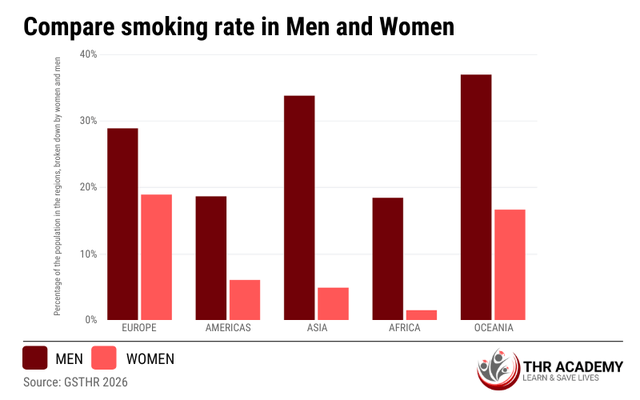
Occupation also plays a major role. Jobs that involve long hours, low pay, or harsh working conditions are often linked with higher tobacco use. Transport workers, miners, and construction labourers commonly report smoking to cope with fatigue, hunger, or stress. Many informal workers in markets or small factories also use both smoked and smokeless tobacco throughout the day, often in settings where such use is socially accepted.
These habits are reinforced by peer influence and the easy availability of cheap, single cigarettes, which fit with daily cash flow. Over time, tobacco becomes embedded in the routines of work and survival, making quitting very difficult without broader social and economic support. These gendered and occupational patterns show that effective tobacco control in LMICs must go beyond reducing national prevalence. Policies must also consider who is most exposed and why. Ignoring these realities risks missing the social and economic drivers that keep people using tobacco.
-
Xie W, Mridha MK, Gupta A, Kusuma D, Butt AM, Hasan M, Brage S, Loh M, Khawaja KI, Pradeepa R, Jha V, Kasturiratne A, Katulanda P, Anjana RM, Chambers JC. Smokeless and combustible tobacco use among 148,944 South Asian adults: a cross-sectional study of South Asia Biobank. BMC Public Health. 2023 Dec 9;23(1):2465.