Why is tobacco use a critical issue in LMICs?
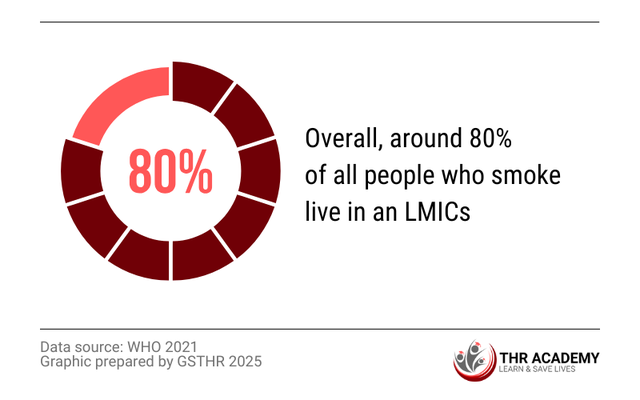
According to the World Health Organization (WHO), tobacco use causes more than 7 million deaths every year, making it one of the leading preventable causes of death worldwide [^1]. Of the world’s 1.3 billion tobacco users, more than 80 percent live in low- and middle-income countries (LMICs) [^1], where health systems are already under pressure and often lack the capacity to manage the resulting chronic diseases.
In South and Southeast Asia, tobacco use is a major driver of cardiovascular disease and oral cancers, while in Sub-Saharan Africa deaths are rising as population growth expand smoking. In Latin America, progress in some countries is offset by continued high rates in others, showing how uneven the epidemic remains across regions.
The health effects of tobacco use span a wide range of diseases. Cardiovascular disease, cancer, and chronic respiratory illness account for most of the burden, while in many parts of Asia and Africa, tobacco use also worsens outcomes for tuberculosis and other infectious diseases. These combined conditions lead to long-term treatment needs that fragile health systems struggle to sustain, often leaving families to bear the financial burden, pushing many into poverty.
The economic impact is staggering. Globally, tobacco use costs an estimated US$1.4 trillion each year in health care expenditures and lost productivity [^2]. The burden is greatest in poorer regions: South Asia faces a heavy toll from smokeless tobacco, Sub-Saharan Africa is witnessing rising youth smoking rates, and Eastern Europe continues to experience high smoking prevalence among men.
Together, these patterns explain why tobacco use is not only a health issue in LMICs, but also a development, equity, and policy challenge. Understanding this context is essential for appreciating why conventional tobacco control alone has often fallen short and why alternative and complementary approaches, including tobacco harm reduction, warrant careful examination in the modules that follow.