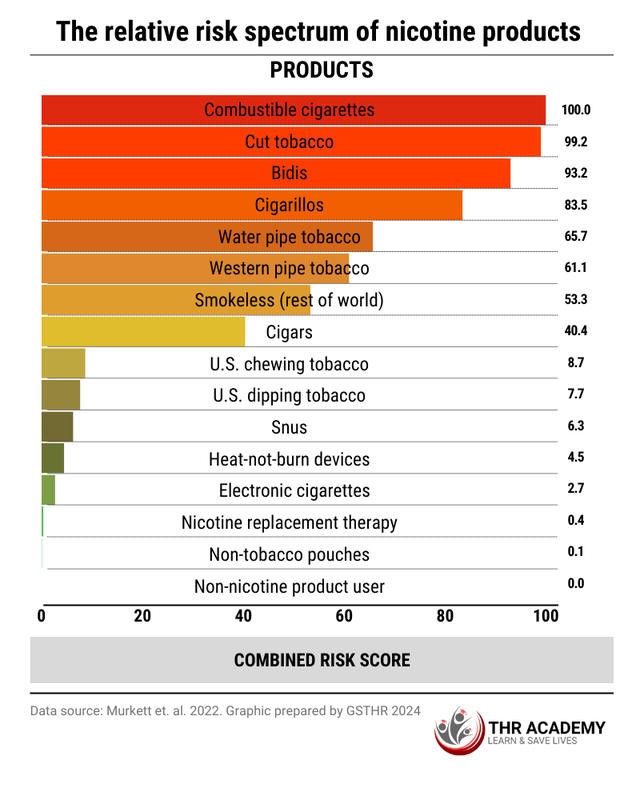
Scientific rationale: the risk continuum
Scientific evidence shows that tobacco and nicotine products exist on a risk continuum, with combustible products such as cigarettes at the highest end of harm, and non-combustible alternatives such as vaping products, nicotine pouches, heated tobacco products (HTPs), and snus at significantly lower risk levels [^1]. Importantly, this continuum reflects comparative risk, not absolute safety; lower-risk products are not risk-free, but their harm exposure is markedly reduced compared with combustible tobacco.
Combustion produces thousands of harmful chemicals, including tar and carbon monoxide, while non-combustible products deliver nicotine without burning tobacco. Studies from multiple countries indicate that vaping is substantially less harmful than smoking (often estimated at around 95% lower risk), while non-combustible oral nicotine products such as snus and modern nicotine pouches are likely to carry even lower health risks, broadly comparable to licensed nicotine replacement therapy (NRT).
Understanding this continuum is essential for designing proportionate policies - those that discourage combustible use while enabling access to lower-risk alternatives.